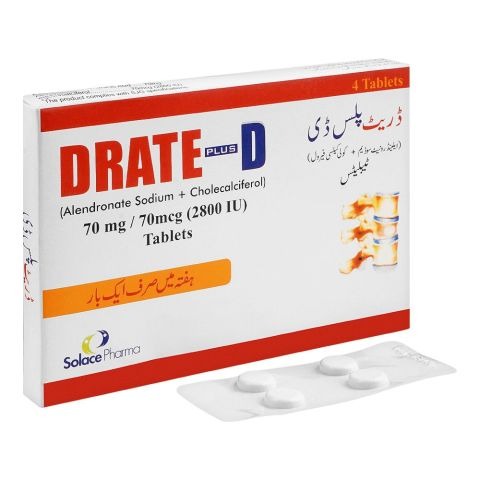
Drate Plus D Tablets 70Mg/70Mcg (1 Box = 1 Strip)(1 Strip = 4 Tablets)
At the cellular level, alendronate shows preferential localization to sites of bone resorption, specifically under...
At the cellular level, alendronate shows preferential localization to sites of bone resorption, specifically under osteoclasts. The osteoclasts adhere normally to the bone surface but lack the ruffled border that is indicative of active resorption. Alendronate does not interfere with osteoclast recruitment or attachment, but it does inhibit osteoclast activity. While incorporated in bone matrix, alendronate is not pharmacologically active. Thus, alendronate must be continuously administered to suppress osteoclasts on newly formed resorption surfaces. Cholecalciferol (vitamin D3) is formed in the skin under influence of UV rays and metabolized in two hydroxylation steps at first in the liver and then in the kidney tissue into the biological active metabolite 1,25-dihydroxy-cholecalciferol. 1,25-dihydroxy-cholecalciferol is involved fundamentally in the regulation of the calcium and phosphate balance together with parathyroid hormone and calcitonin.
Purpose
Osteoporosis
Ingredients
Alendronate Sodium , Cholecalciferol
Warnings
Causes of osteoporosis other than estrogen deficiency, aging and glucocorticoid use is advised to be considered.
Physicians is advised to be alert to symptoms signaling a possible esophageal reaction including dysphasia, odynophagia, retrosternal pain or new/worsening heartburn. Patients is advised to be instructed to discontinue alendronate.
Alendronate is not recommended for patients with severe renal insufficiency (creatinine clearance ).
Side Effects
Body as a Whole: Common: Hypersensitivity reactions including urticaria, transient symptoms of myalgia and malaise. Rare: Angioedema, fever, symptomatic hypocalcemia. Gastrointestinal: Common: Esophagitis, esophageal erosions, esophageal ulcers. Rare: Esophageal stricture or perforation and oropharyngeal ulceration. Gastric or duodenal ulcers, some severe and with complications, have also been reported. Skin: Common: Rash (occasionally with photosensitivity), pruritis. Rare: Severe skin reactions, including Stevens-Johnson syndrome and toxic epidermal necrolysis. Special Senses: Rare: Uveitis, scleritis.
Storage Instructions
Store this medicine at room temperature, away from direct light and heat.
| Brand | SJ & G |
| Status | Active |
Related Products