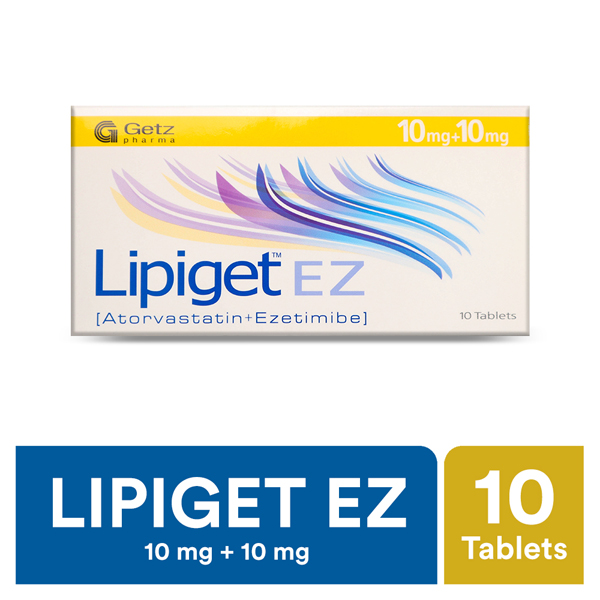
Lipiget Ez Tablets 10Mg/10Mg (1 Box = 1 Strip)(1 Strip = 10 Tablets)
Atorvastatin is a selective, competitive inhibitor of HMG-CoA reductase, the rate limiting enzyme responsible for the...
Atorvastatin is a selective, competitive inhibitor of HMG-CoA reductase, the rate limiting enzyme responsible for the conversion of 3-hydroxy-3-methyl-glutarylcoenzyme A to mevalonate, a precursor of sterols, including cholesterol. Triglycerides and cholesterol in the liver are incorporated into very low-density lipoproteins (VLDL) and released into the plasma for delivery to peripheral tissues. Low-density lipoprotein (LDL) is formed from VLDL and is catabolized primarily through the receptor with high affinity to LDL (LDL receptor). Atorvastatin reduces total-C, LDL-C and Apo B in both normal volunteers and in patients with homozygous and heterozygous familial hypercholesterolaemia (FH), non-familial forms of hypercholesterolaemia and mixed dyslipidaemia. Atorvastatin also reduces very low density lipoprotein cholesterol (VLDL-C) and triglycerides and produces variable increases in HDL-C and apolipoprotein A-1. Ezetimibe Ezetimibe localizes at the brush border of the small intestine and inhibits the absorption of cholesterol, leading to a decrease in the delivery of intestinal cholesterol to the liver. This causes a reduction of hepatic cholesterol stores and an increase in clearance of cholesterol from the blood.
Purpose
Cholesterol Control
Ingredients
Atorvastatin , Ezitimibe
Warnings
Exceptional cases of interstitial lung disease have been reported with some statins, especially with long term therapy. If it is suspected that a patient has developed interstitial lung disease, statin therapy is advised to be discontinued.
Some evidence suggests that statins as a class raise blood glucose and in some patients, at high risk of future diabetes, may produce a level of hyperglycaemia where formal diabetes care is appropriate. Patients at risk (fasting glucose 5.6 to 6.9 mmol/L, BMI>30kg/m2 , raised triglycerides, hypertension) is advised to be monitored both clinically and biochemically according to national guidelines.
This formulation contains lactose. Patients with rare hereditary problems of galactose intolerance, the Lapp lactase deficiency or glucose-galactose malabsorption is advised to not take this medicine.
Side Effects
Common: Diarrhoea and myalgia. Uncommon: influenza, depression, insomnia, sleep disorder, dysgeusia, paraesthesia, dizziness, headache, dyspnoea, sinus bradycardia, hot flush, abdominal discomfort, abdominal pain, abdominal pain lower, abdominal pain upper, frequent bowel movements, stomach discomfort, upset stomach, abdominal distension, constipation, dyspepsia, flatulence, gastritis, nausea, acne, urticaria, arthralgia, back pain, muscle fatigue, muscular weakness, pain in extremity, muscle spasms, musculoskeletal stiffness, asthenia, oedema, fatigue, malaise, ALT and/or AST increased, alkaline phosphatase increased, gamma-glutamyltransferase increased, hepatic enzyme increased, liver function test abnormal, weight increased and blood CK increased.
Storage Instructions
Store this medicine at room temperature, away from direct light and heat.
| Brand | Getz |
| Status | Active |
Related Products