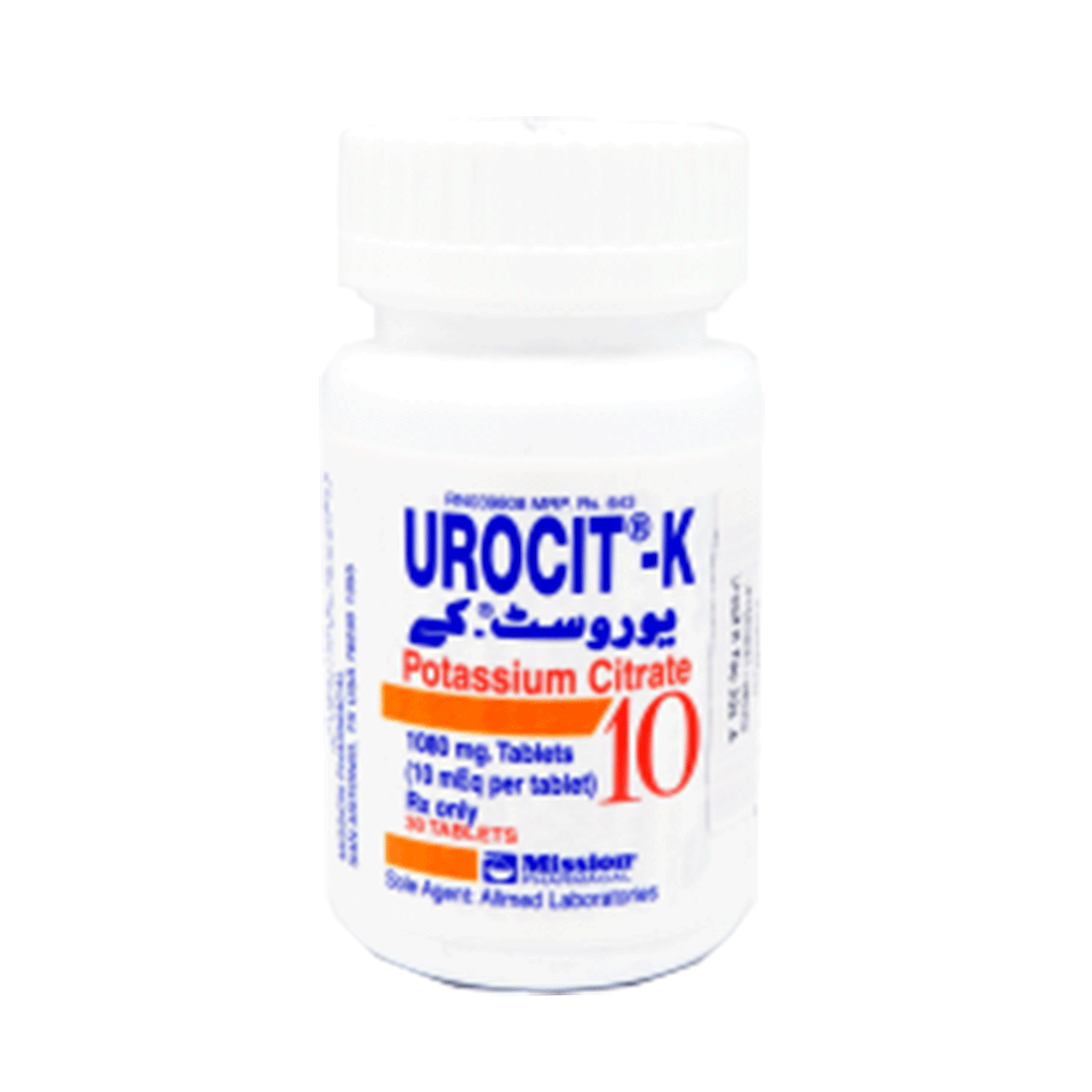
Urocit-K Tablets 1080Mg (1 Bottle = 30 Tablets)
When given orally, the metabolism of absorbed citrate produces an alkaline load
When given orally, the metabolism of absorbed citrate produces an alkaline load. The induced alkaline load in turn increases urinary pH and raises urinary citrate by augmenting citrate clearance without measurably altering ultra-filterable serum citrate. In addition to raising urinary pH and citrate, increases urinary potassium by approximately the amount contained in the medication. It causes a transient reduction in urinary calcium. The changes induced by potassium citrate produce urine that is less conducive to the crystallization of stone-forming salts (calcium oxalate, calcium phosphate and uric acid). Increased citrate in the urine, by complexing with calcium, decreases calcium ion activity and thus the saturation of calcium oxalate. Citrate also inhibits the spontaneous nucleation of calcium oxalate and calcium phosphate (brushite). The increase in urinary pH also decreases calcium ion activity by increasing calcium complexation to dissociated anions. The rise in urinary pH also increases the ionization of uric acid to the more soluble urate ion. Therapy does not alter the urinary saturation of calcium phosphate, since the effect of increased citrate complexation of calcium is opposed by the rise in pH-dependent dissociation of phosphate. Calcium phosphate stones are more stable in alkaline urine.In the setting of normal renal function, the rise in urinary citrate following a single dose begins by the first hour and lasts for 12 hours. With multiple doses the rise in citrate excretion reaches its peak by the third day and averts the normally wide circadian fluctuation in urinary citrate, thus maintaining urinary citrate at a higher, more constant level throughout the day. When the treatment is withdrawn, urinary citrate begins to decline toward the pre-treatment level on the first day. The rise in citrate excretion is directly dependent on the dosage. In patients with severe renal tubular acidosis or chronic diarrheal syndrome where urinary citrate may be very low (<100 mg/day), It may be relatively ineffective in raising urinary citrate. A higher dose may therefore be required to produce a satisfactory citraturic response. In patients with renal tubular acidosis in whom urinary pH may be high, it produces a relatively small rise in urinary pH.
Purpose
Kidney Disease
Ingredients
Potassium Citrate
Warnings
In patients with impaired mechanisms for excreting potassium, administration can produce hyperkalemia and cardiac arrest. Potentially fatal hyperkalemia can develop rapidly and be asymptomatic.
Upper gastrointestinal mucosal lesions and bleeding is advised to be anticipated. If there is severe vomiting, abdominal pain or gastrointestinal bleeding, it is advised to be discontinued as soon as possible and the possibility of bowel perforation or obstruction investigated.
Safety and effectiveness in children have not been established.
Side Effects
Abdominal discomfort, vomiting, diarrhea, loose bowel movements or nausea .
Storage Instructions
Store this medicine at room temperature, away from direct light and heat.
| Brand | Allmed Pharma |
| Status | Active |
Related Products