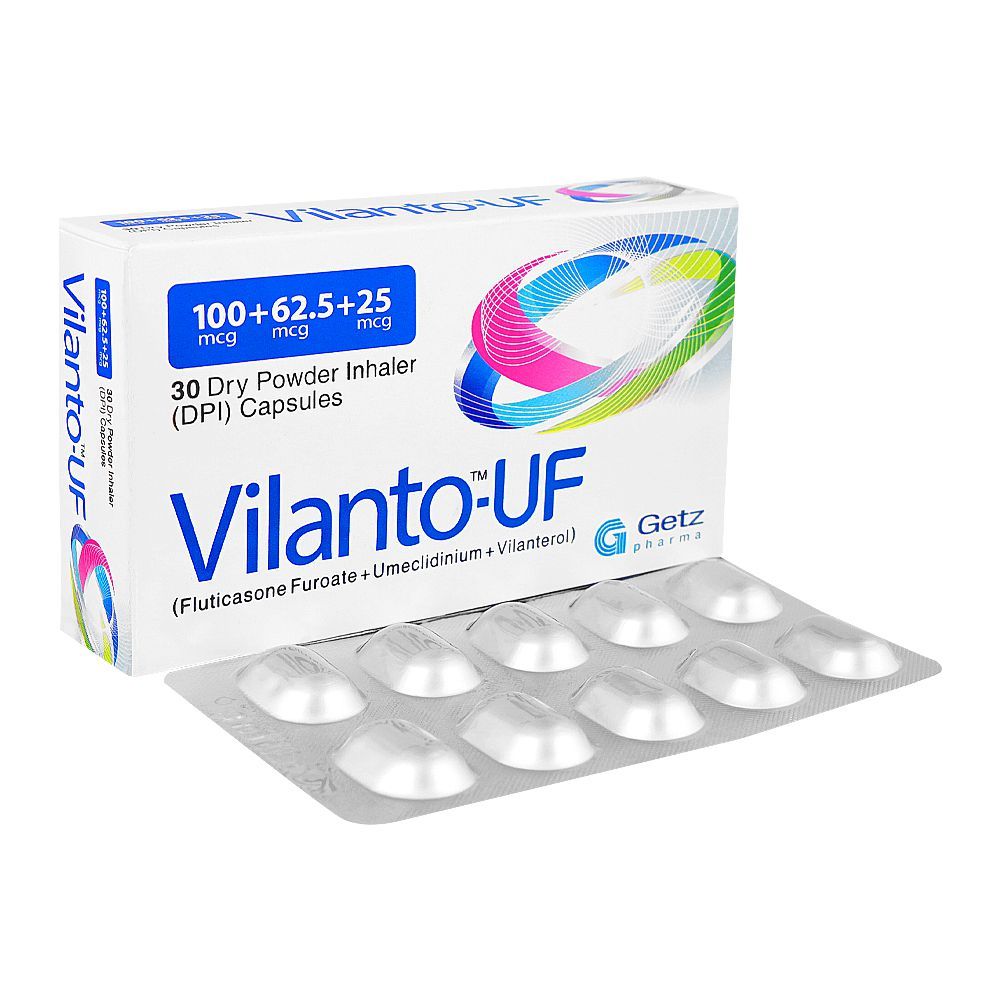
Vilanto-Uf Tablets 100+62.5+25Mcg (1 Box = 3 Strips) (1 Strip = 10 Tablets)
Fluticasone Furoate : Fluticasone Furoate is a corticosteroid with potent anti-inflammatory activity
Fluticasone Furoate : Fluticasone Furoate is a corticosteroid with potent anti-inflammatory activity. The precise mechanism through which Fluticasone Furoate affects COPD symptoms is not known. Corticosteroids have been shown to have a wide range of actions on multiple cell types (e.g. eosinophils, macrophages, lymphocytes) and mediators (e.g. cytokines and chemokines) involved in inflammation. Umeclidinium : Umeclidinium is a long-acting muscarinic receptor antagonist (also referred to as an anticholinergic). Umeclidinium exerts its bronchodilatory activity by competitively inhibiting the binding of acetylcholine with muscarinic receptors on airway smooth muscle. It demonstrates slow reversibility at the human M3 muscarinic receptor subtype in vitro and a long duration of action in vivo when administered directly to the lungs in pre-clinical models. Vilanterol : Vilanterol is a selective long-acting, beta2 -adrenergic receptor agonist (LABA). The pharmacologic effects of beta2 - adrenergic agonists, including Vilanterol, are at least in part attributable to stimulation of intracellular adenylate cyclase, the enzyme that catalyses the conversion of adenosine triphosphate (ATP) to cyclic-3'''',5''''-adenosine monophosphate (cyclic AMP). Increased cyclic AMP levels cause relaxation of bronchial smooth muscle and inhibition of release of mediators of immediate hypersensitivity from cells, especially from mast cells.
Purpose
Chronic Obstructive Pulmonary Disease
Ingredients
Fluticasone Furoate +Umeclidinium +Vilanterol
Warnings
Fluticasone Furoate + Umeclidinium + Vilanterol is advised to not be used more often than recommended, at higher doses than recommended, or in conjunction with other medicines containing LABA (Long-acting Beta2-agonists) , as an overdose may result .
During withdrawal from oral corticosteroids, some patients may experience symptoms of systemically active corticosteroid withdrawal (e.g., joint and/or muscular pain, lassitude, depression) despite maintenance or even improvement of respiratory function.
Lower respiratory tract infections, including pneumonia, have been reported following the inhaled administration of corticosteroids. Physicians is advised to remain vigilant for the possible development of pneumonia in patients with COPD as clinical features of pneumonia and exacerbations frequently overlap.
Side Effects
Common : Pneumonia, upper respiratory tract infection, bronchitis, pharyngitis, rhinitis, sinusitis, influenza, nasopharyngitis, candidiasis of mouth and throat, urinary tract infection, headache, cough, oropharyngeal pain, constipation, arthralgia and back pain. Uncommon : Viral respiratory tract infection, fractures, dysgeusia, vision blurred, glaucoma, eye pain, supraventricular tachyarrhythmia, tachycardia, atrial fibrillation, dysphonia and dry mouth. Rare: Hypersensitivity reactions including anaphylaxis, angioedema, urticaria, and rash, hyperglycemia, anxiety, tremor, intraocular pressure increased, palpitations, muscle spasms urinary retention and dysuria.
Storage Instructions
Store this medicine at room temperature, away from direct light and heat.
| Brand | Getz |
| Status | Active |
Related Products